The Art of Symbolism
The Jerusalem Cross
A large cross with a smaller cross in each of its four corners. For eight centuries it has stood for Jerusalem — and for the faith that went out from it to the four corners of the world.
Where it comes from
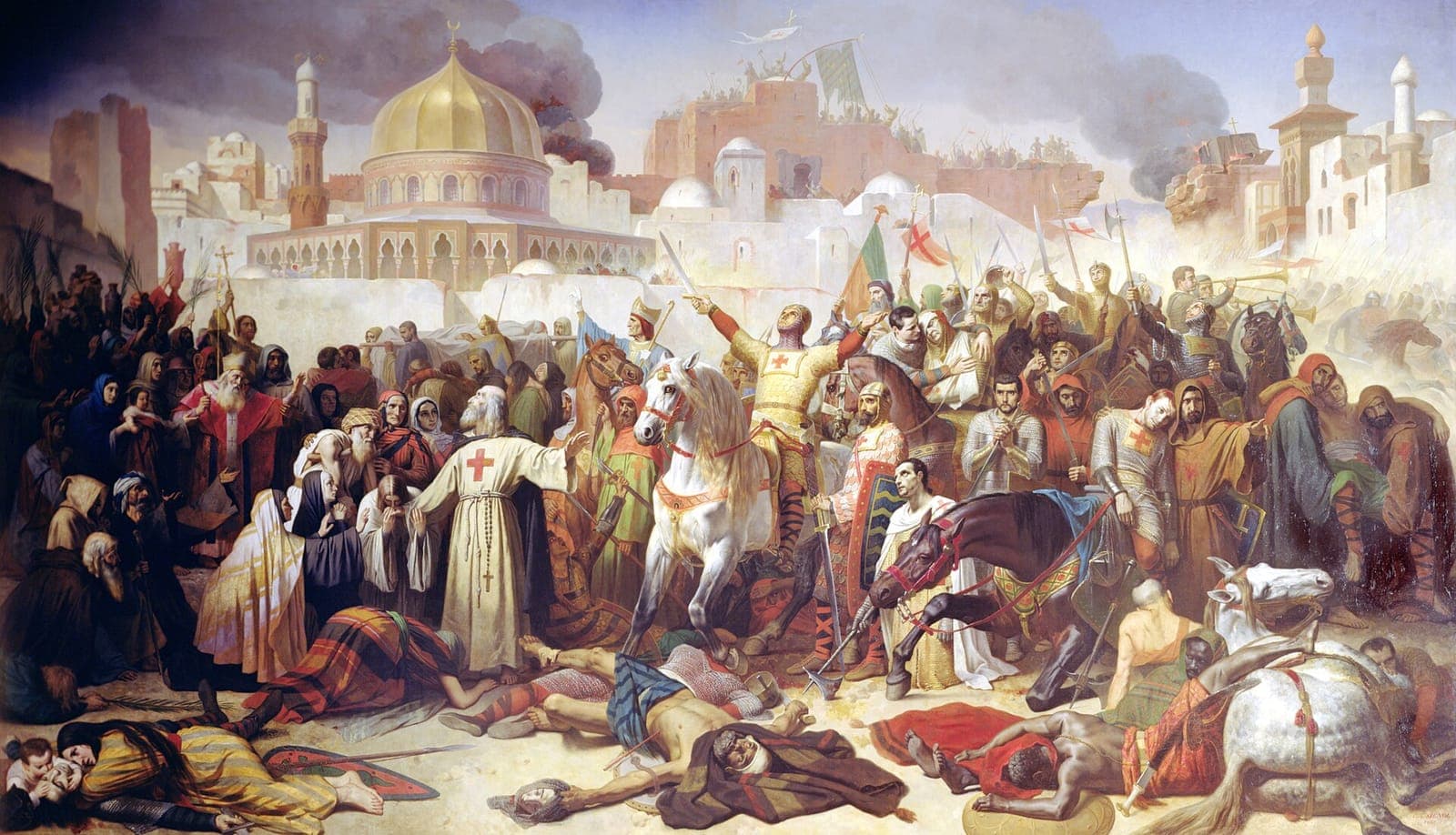
The First Crusade took Jerusalem in 1099, and the crusaders founded a kingdom there. By the thirteenth century the five-fold cross was the kingdom's coat of arms: gold crosses on a silver field.
Gold on silver breaks one of heraldry's basic rules — metal is not placed on metal. The usual explanation is that the exception was deliberate, marking Jerusalem as a city like no other.
What it means
Readings vary. The most common is that the five crosses are the five wounds of Christ. Others see Christ at the centre with the four Gospel writers around Him, or the Gospel going out from Jerusalem to the four corners of the earth.
Where you'll see it today
It is the emblem of the Franciscan Custody of the Holy Land, which has cared for the holy places for centuries. A red Jerusalem cross is the badge of the Equestrian Order of the Holy Sepulchre of Jerusalem — the same red our crusader pieces carry. Five crosses also fly on the national flag of Georgia.


