The Art of Symbolism
The Chi Rho
Two Greek letters laid over each other — Χ (chi) and Ρ (rho), the first letters of ΧΡΙΣΤΟΣ, Christos. It is one of the oldest symbols of Christ.
“Conquer by this.”
In this sign
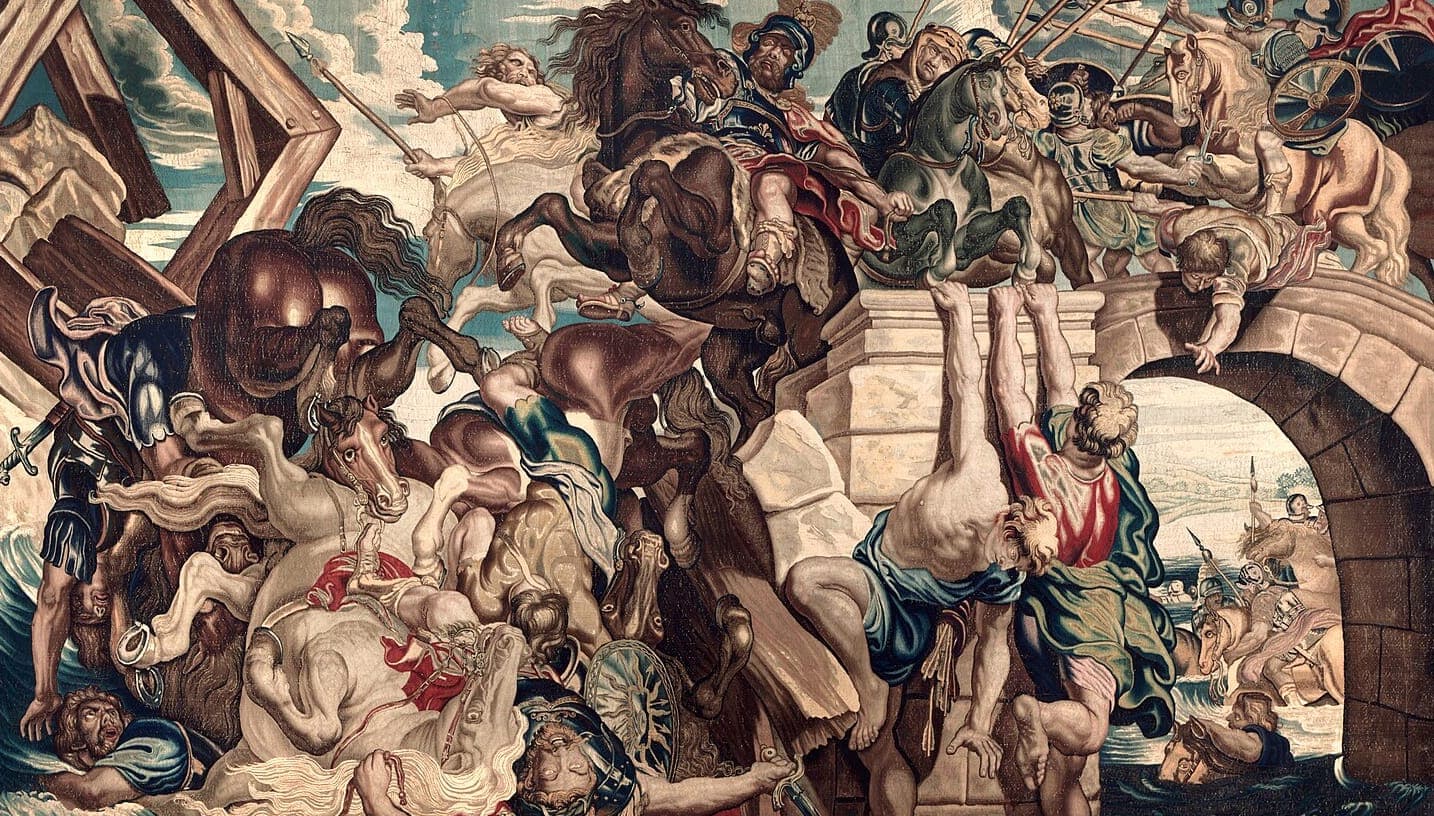
In AD 312 Constantine marched on Rome against his rival Maxentius. The Christian writer Lactantius records that before the battle at the Milvian Bridge, Constantine was told in a dream to mark the heavenly sign of God on his soldiers' shields. Eusebius tells of a cross of light seen in the sky with the words "conquer by this", and of a battle standard, the labarum, crowned with the Chi Rho.
Constantine won. The next year the Edict of Milan gave Christians freedom of worship across the empire.
After Constantine
The Chi Rho spread across the Roman world — on coins, on soldiers' standards, on church walls and on Christian tombs. It is often shown between Α and Ω, alpha and omega, after Revelation 22:13: "I am Alpha and Omega, the beginning and the end, the first and the last."

